Greetings!
This post is a more comprehensive introduction to who I am and what I’m doing here on the internet. While the About page contains a lot of relevant professional and academic information, it doesn’t really show the whole picture of who’s behind all that work. Don’t worry—this will likely be the only self-indulgent post on here, at least for a long time.
Who I am
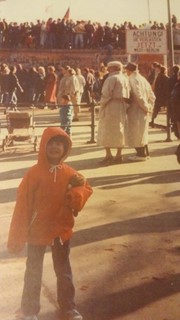
I always have trouble explaining where I’m from. I grew up as a military brat, which means that we were stationed all over the world thanks to the Army. My first memories are of Berlin, Germany, in the late eighties (fun fact: I was at the Wall the day it came down). Moving back to the United States was initially traumatic, as I’d never been around that many civilian kids before, so I desperately wanted to move back “home” for quite some time. But, after moving all over the southeast for the next few years, I finally accepted that we were, in fact, American.
When I graduated high school in 2002, I hated the whole academic system and resolved to avoid college at all costs. I stuck with retail management for almost twenty years, working at Hot Topic, Gloria Jean’s, Movie Gallery, Target, Starbucks, Old Navy, and Chipotle. Often, I’d work two or three jobs at a time, as the Great Recession hit people in my age group and industry particularly hard. I’d also gotten married and bought a house in 2007, mere weeks before the bubble burst.
I finally started taking college classes in the spring of 2011. My then-husband had been laid off and was unable to find a new job for several months, so I’d had to find a job making enough money to pay all the bills. Luckily, I had a good friend at Old Navy who helped me get an assistant manager gig…provided that I enrolled in some sort of college. So, I started part-time at the University of South Carolina Aiken as an English major (go Pacers!), taking a couple of classes a semester and continuing to work full-time.
I might have to dedicate a whole post to my time at USCA. I have big thoughts about how beneficial it was for me to start at a smaller university and how much I appreciated the accessibility of the faculty. For right now, I’ll say that I originally enrolled as a creative writing minor because I wanted to be the next Stephen King. Humble, I know.
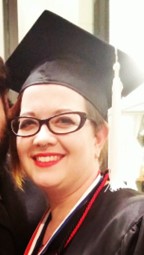
That dream changed in a Survey of British Literature class, thanks to a professor who still looms large in my work and pedagogy. I fell in love with Beowulf and had a fantastic affair with Deor, and before I knew it, I’d jumped ship and declared myself a medievalist. I took several medieval classes and completed an Old English language independent study, and upon graduating in December 2016, decided to pursue graduate school.
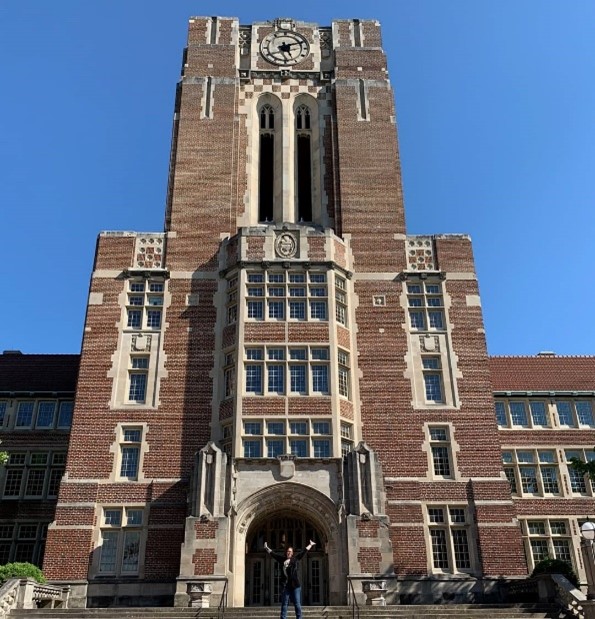
I won’t bore you with all the details of the master’s program, suffice to say that I stumbled upon the kernel of my eventual dissertation topic in what was supposed to be a throwaway class: Appalachian Literature. I wrote a small hot take paper positing that Cormac McCarthy’s Child of God was a contemporary retelling of Beowulf, presented it at a conference the next fall, and discovered that McCarthy had embedded medieval references all throughout his first five novels—The Orchard Keeper, Outer Dark, Child of God, Suttree, and Blood Meridian. I completed the program in May 2020 and started the Ph.D. program at UTK in the following fall semester.
I couldn’t let this topic go, even when benevolently accused of indulging in “medievalism” rather than being a serious “medievalist” (another forthcoming blog). Despite that feedback, I successfully defended my prospectus in April 2023 and am now knee-deep in dissertation land. Which is exceptionally, devastatingly isolating. So here we are. I’m getting back to my creative writing roots and blessing you all with my prose to hopefully connect with some like-minded people.
What I Do
In short, I do a lot as a graduate student and human being. I was surprised to learn that being a graduate student has a lot in common with working multiple jobs—I teach sections of freshmen English classes, worked side jobs within the university, and for the first two years of the Ph.D. program, took courses. As with most institutions, the most challenging part of being a graduate student has been how I pay the bills, as most graduate pay rates are barely enough to cover rent (believe me, I’ve got a whole rant about that and have rallied with my campus union several times on the matter). This is an intro blog, however, so let’s focus on what I CAN do here.
Teaching
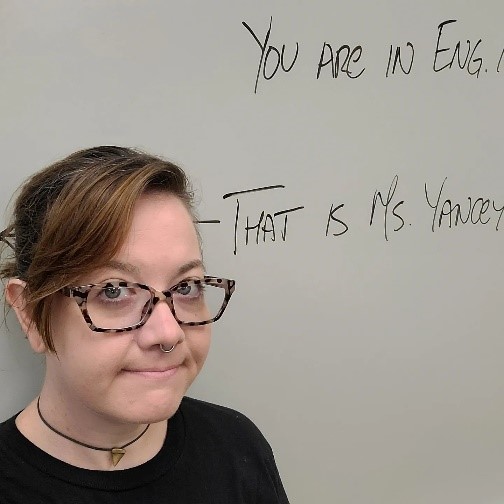
Per our contract, most English Ph.D. students teach 1-2 sections of English 101 and 102. 101 is more composition and rhetoric-based, while 102 is more research-based. I build both courses around a theme, with 101 focusing on rhetoric through visual mediums (graffiti) and 102 focusing on cultural understanding of “The Good Death.” I’ve also taught “102: Inquiry into the Apocalypse” in the past, but COVID made that one a bit too real, so I shelved it for a bit. While both classes have specific department guidelines and expectations, we have a lot of flexibility in how we design our syllabus and class dynamics. I love having this freedom!
In addition to the regular freshmen surveys, I’ve also taught a “First Year Studies” section for students in pre-professional fields. This class combined a “how to college” approach with “how to position yourself professionally while you’re still a freshman with little to no job experience or knowledge of your field” with mixed results. You can only do so much with a one-hour-a-week class at 5:30pm on Thursday evenings, you know?
Tutoring
As a master’s student, I worked at UTK’s Judith Anderson Herbert Writing Center (JAHWC). Most appointments were with freshmen students seeking help with the intro classes, which was fun in the beginning and became tedious after a while. I’d also worked in the writing center at USCA, so it was nice to be in a (relatively) familiar space, albeit at a much faster pace. We were typically booked solid, so most meetings had to be brief—I often compared it to Black Friday sales in retail.
To make some extra money, I also worked at the UTK Thornton Athletics Student Life Center’s Writing Lab for a few years. I worked with several student athletes who brought the same drive and ambition off the field and into their work. Since we had fewer students total, we had a lot more flexibility in how we conducted tutoring sessions. We could take more time when needed and often developed more of a rapport with repeat students. I loved my time there, and if I wasn’t limited in how many hours I can work a week (only 5!?!), I’d still be there.

I currently work as an embedded writing consultant at the UTK Veterans Success Center. A few years ago, I realized that I typically had more veteran students in my classes than my peers. When I investigated this phenomenon, I found it was due to word of mouth—my name had been circulating for quite some time. In addition, I also found that they weren’t using resources like the writing center, even though many would clearly benefit from a meeting or two. In fall 2021, I volunteered in the VSC for roughly five hours a week, occasionally working with students and investing a lot of time in building relationships. In the following semester, the JAHWC hired me to continue working at the VSC under their umbrella as a paid position. The last few years have been hugely successful, and I’m now crafting training materials and making plans to introduce at least one additional tutor next year. Of all the things I’ve done so far at UTK, I’m most proud of what I’ve done here.
Research
I’ve already talked about this a bit in my bio, but here’s a bit more detail on my research at this point. Broadly, I’m interested in the afterlives of medieval texts: how they’ve evolved over time through adaptation and subversion and how they continue to influence new texts and media today. It’s tempting, and often necessary, to locate medieval texts solely within their original period, but I argue that they’re more complex than that. I’m not saying that this practice is wrong—in fact it’s critical for new medievalists to start with this approach—but I am saying that texts don’t just end there. In fact, they have robust lives today, whether we’re aware of it or not!
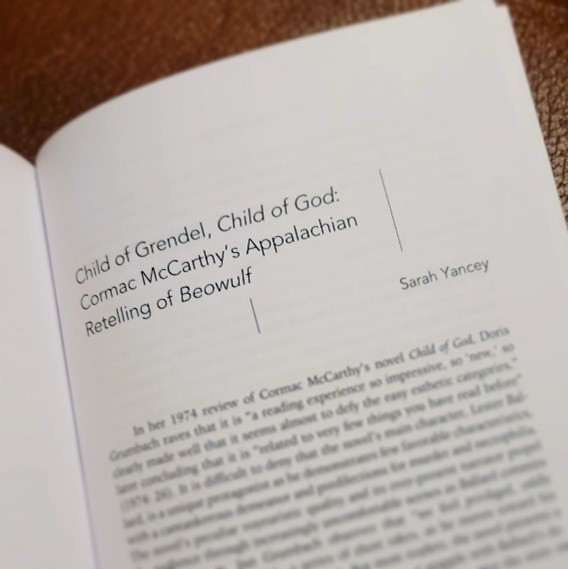
To illustrate this argument, I’m using some of Cormac McCarthy’s novels as examples of Appalachian medievalism. Before Mr. McCarthy’s ghost haunts me in disgust, I’m not claiming that his writing was exclusively medieval (but, if his ghost wants to show up and explain a few things, I wouldn’t argue). His early work was incredibly complex and undeniably rooted in the Appalachian region, but he also embedded numerous medieval elements. I’ve published one article on this at the time of this entry and hopefully have more coming as I continue to work on my dissertation.
Writing
I mentioned earlier that I minored in creative writing at USCA. While I enjoyed writing short stories and had a fantastic experience workshopping and presenting some of my work, fiction clearly wasn’t my gift. To be honest, neither is academic writing, but that’s beside the point. I really enjoy public writing and crafting accessible scholarship that isn’t buried in dense academese. For better or worse, our future is online, and it’s here that I hope to make new connections while exercising my creative muscles. Come along and join the fun!
 The Bad Medievalist
Leave a comment